

An eCommerce CRM system helps you turn customer data into repeat purchases, faster support, and more predictable revenue. If your store doesn’t have a CRM, customer data ends up scattered across email, support, analytics, and spreadsheets—making retention and personalization harder to scale. According to recent industry studies, modern eCommerce CRM software delivers ROI through improved retention, personalization, and automation rather than direct sales tracking alone.
If your eCommerce business is growing, CRM integration becomes a practical necessity rather than an optional upgrade. In this article, we will learn about CRM in online shopping, highlight pros and cons of CRM for online stores, and cover the best eCommerce CRM software for small and medium-sized businesses.
What is an eCommerce CRM System?
CRM stands for Customer Relationship Management. CRM software for eCommerce centralizes customer data across orders, support, marketing, and sales—so teams can act on one shared customer profile. A modern eCommerce CRM system connects customer profiles with purchase history, support tickets, and marketing touchpoints in one place, helping teams personalize communication and predict customer behavior.
The main purpose of CRM is to accumulate all the information about customers and optimize business processes by improving relations with customers and increasing sales.
What can an eCommerce CRM do?
Using a CRM for eCommerce website operations makes your business more profitable by automating key processes and reducing manual work. CRM software for eCommerce helps teams automate follow-ups, segment audiences, and personalize communication at scale. Moreover, there are a lot of spheres which are covered by CRM systems:
- Centralizes customer interactions with full order history sync (orders, calls, chats, email, tickets) in one timeline
- Automates routine workflows (follow-ups, task assignment, status updates)
- Provides reporting and customer analytics
- Enables omnichannel messaging (email, SMS, messengers) and automation
In 2026, the biggest CRM value is not “storing contacts,” but connecting customer behavior, purchases, and support history into a single, actionable timeline. That timeline powers automation: abandoned cart recovery, win-back campaigns, VIP retention, and proactive support triggers.
Key Features of an eCommerce CRM System in 2026
A modern eCommerce CRM system is no longer just a contact database. In 2026, the best eCommerce CRM software combines customer data, automation, and analytics to support growth and retention at scale.
Key features to look for in eCommerce CRM solutions include:
- Customer 360° view — a unified customer profile that combines orders, browsing behavior, support tickets, and communication history
- Advanced customer segmentation — grouping customers by behavior, purchase history, lifetime value, and engagement
- Automation workflows — automated follow-ups, abandoned cart reminders, win-back campaigns, and post-purchase communication
- Omnichannel communication — email, SMS, messengers, and in-app notifications managed from one interface
- Sales and support pipelines — structured workflows for leads, deals, and customer requests
- Analytics and reporting — visibility into conversion rates, retention, repeat purchases, and team performance
- Integrations with eCommerce platforms — native or API-based connections to your store, payment systems, and marketing tools
A true customer 360 view is built on first-party eCommerce customer data, effectively turning the CRM into a lightweight customer data platform for sales, support, and marketing teams.
This is exactly what businesses look for when comparing eCommerce CRM solutions and choosing the best eCommerce CRM for long-term growth.
AI and Automation in eCommerce CRM Software
In 2026, AI-driven automation has become a core part of eCommerce CRM software. The goal is no longer manual data entry or static reports, but predictive and proactive customer management.
Modern CRM software for eCommerce uses AI to:
- Identify high-value and at-risk customers based on behavior patterns
- Predict churn and trigger retention workflows automatically
- Recommend the next best action for sales or support teams
- Optimize customer segmentation in real time
- Personalize communication across channels without manual rules
Advanced customer segmentation allows eCommerce teams to adapt messaging and offers across the entire customer lifecycle. These CRM automation workflows support modern eCommerce retention strategies rather than one-off campaigns.
Automation also reduces operational overhead. Routine tasks such as assigning leads, updating deal stages, sending follow-ups, and tagging customers are handled automatically. This allows eCommerce teams to focus on strategy, customer experience, and growth instead of manual coordination.
For growing online stores, AI-powered eCommerce CRM solutions make it possible to scale personalization and retention without increasing headcount.
Advantages of Using an eCommerce CRM
Modern eCommerce CRM software improves how businesses manage customers, communication, and retention. A CRM for eCommerce and wholesale businesses helps businesses achieve:
- More targeted marketing and segmentation
- Increased workflow efficiency
- Detailed customer analytics
- Faster access to customer context for sales and support
- Better customer relations and customer experience
Disadvantages of eCommerce CRM Software
- Difficulty of implementation. The real cost is not the subscription—it’s poor data hygiene and unclear workflows. A CRM won’t help if teams continue working in inboxes and spreadsheets instead of a shared system.
Some eCommerce platforms have built-in CRM tools. For example, CS-Cart Multi-Vendor has a basic CRM system which is enough for the beginning.
- The need for employee training. Even user-friendly CRM tools require onboarding: pipeline setup, segmentation rules, and team habits. Due to the extensive functionality this technology may not be welcomed with ease for the first time. However, with time passing by, employers can get used to it.
Does Your eCommerce Business Need a CRM System?
There are some signs that your business needs the CRM system.
- Your support or sales team grows, but response time and quality don’t improve
- Customer data is scattered across inboxes, spreadsheets, and help desk tools
- Customer requests get missed, and you can’t reconstruct order history or previous conversations
- Manual processes cause mistakes in fulfillment, returns, or customer communication
- You want to implement advanced marketing strategy or loyalty system
These are all signs your business could benefit from a CRM for online store to streamline workflows and keep up with growing customer expectations.
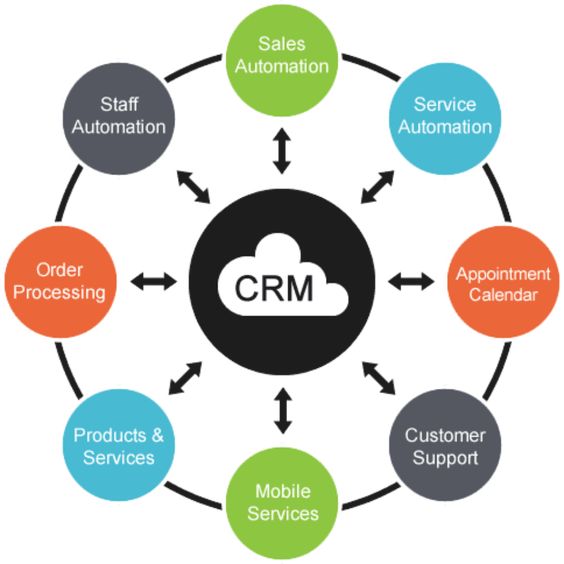
Some entrepreneurs consider that CRM is needed only for big-sized businesses but CRM for small retail businesses is also a great solution. Automated systems help to boost any business. For small business CRM and CMS are required, but ERP is a solution for bigger players. The value of a CRM for eCommerce depends on how well it integrates with the eCommerce platform, payments, and support tools.
Once the role of CRM in the eCommerce stack is clear, the next step is choosing the right eCommerce CRM platform for your business size and growth stage.
CRM vs CMS vs ERP: Key Differences for eCommerce Businesses
In practice, eCommerce businesses often use all three systems together: the CMS runs the storefront, the eCommerce CRM system manages customer relationships, and the ERP handles inventory and financial operations.
| System | What It Manages | Main Purpose | Typical Use in eCommerce |
|---|---|---|---|
| CMS (Content Management System) | Website content, product catalog, pages, media | Manage and publish storefront content | Running the online store interface, managing products, categories, and pages |
| CRM (Customer Relationship Management) | Customer profiles, orders history, interactions, communication | Build and maintain customer relationships | Sales, support, retention, personalization, loyalty programs |
| ERP (Enterprise Resource Planning) | Inventory, procurement, finance, accounting, operations | Manage internal business operations | Stock control, supply chain, financial reporting, procurement |
Best eCommerce CRM Solutions in 2026
Below is a practical shortlist of eCommerce CRM solutions that work well for small and midsize online stores in 2026.
1. HubSpot CRM
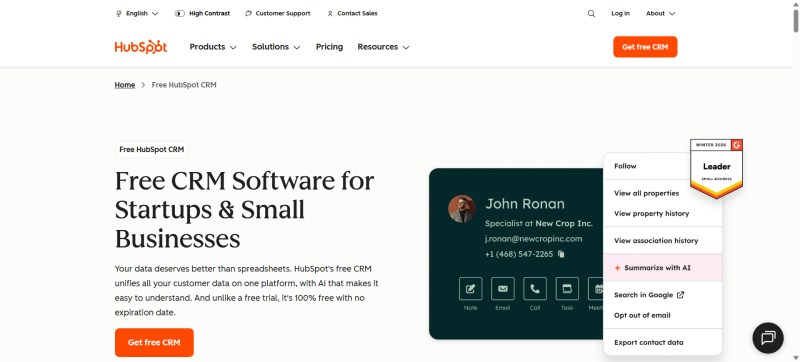
Best for: eCommerce marketing automation, lifecycle CRM, SMB growth
Key features: marketing automation, customer segmentation, omnichannel messaging, eCommerce integrations, scalable CRM
HubSpot CRM is one of the most widely used eCommerce CRM systems in 2026, especially among growing online stores that want to align marketing, sales, and support in one platform. It combines CRM functionality with marketing automation, email campaigns, customer segmentation, and analytics. This makes HubSpot particularly strong for eCommerce lifecycle management, from first purchase to repeat orders and retention.
For eCommerce businesses, HubSpot stands out thanks to its strong automation capabilities. You can track customer behavior, build segmented audiences, trigger personalized emails, and manage deals and pipelines from a single dashboard. HubSpot also integrates easily with eCommerce platforms, payment systems, and analytics tools, making it a solid CRM software for eCommerce stores that focus on retention and lifecycle marketing.
Another advantage is scalability. Many businesses start with the free plan and gradually move to paid tiers as their eCommerce CRM needs grow. The downside is pricing: advanced automation and reporting features become expensive at scale, which may be a limitation for very small teams.
2. Salesforce
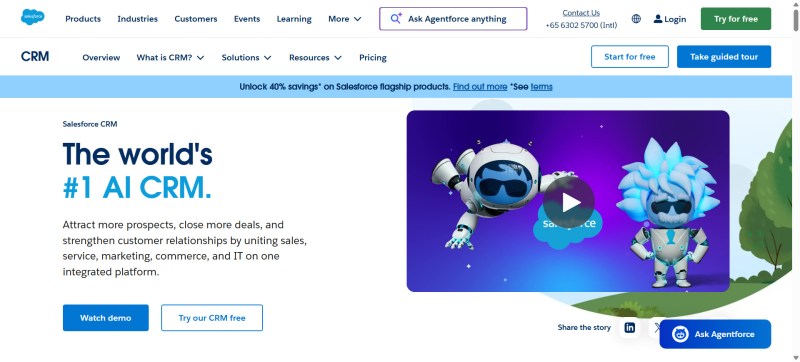
Best for: enterprise eCommerce and complex customer journeys
Key features: advanced automation, AI insights (Einstein), enterprise integrations, deep analytics, multi-channel CRM
Salesforce is an enterprise-grade eCommerce CRM system built for businesses with complex sales processes, large customer bases, and advanced integration requirements. It is one of the most powerful CRM platforms on the market and is widely used by global eCommerce brands.
Salesforce offers deep customer data management, advanced analytics, AI-driven insights (Einstein AI), and extensive automation capabilities. As a CRM for eCommerce, it supports complex customer journeys, multichannel communication, and tight integration with marketing, commerce, and support tools.
The main drawback is complexity and cost. Salesforce requires professional setup, ongoing administration, and a clear CRM strategy. It is not a plug-and-play solution. However, for large eCommerce businesses or marketplaces that need full control over data, workflows, and scalability, Salesforce remains one of the best eCommerce CRM solutions available.
3. Zoho CRM
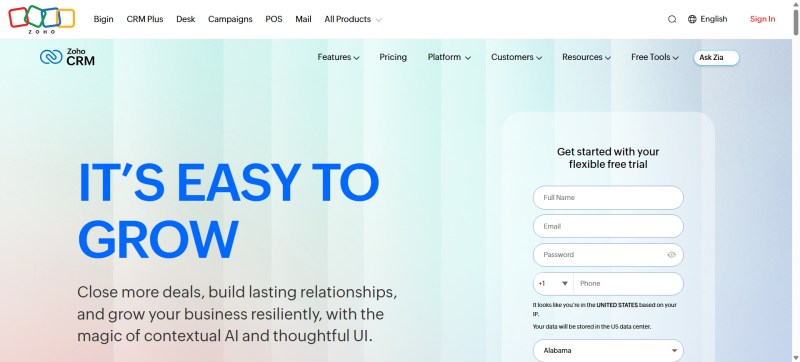
Best for: customizable eCommerce CRM for small and midsize teams
Key features: flexible workflows, AI assistant (Zia), multichannel communication, ecosystem integrations, affordable scaling
Zoho CRM is a flexible eCommerce CRM solution designed for small and medium-sized businesses that want deep customization without enterprise-level costs. It is part of the broader Zoho ecosystem, which includes tools for email marketing, finance, inventory, help desk, and analytics.
As a CRM for eCommerce, Zoho offers customer segmentation, sales automation, multichannel communication (email, phone, social), and AI-powered insights through Zia, its built-in assistant. Ecommerce teams can track leads, orders, and customer interactions while automating follow-ups and sales workflows.
Zoho CRM works best for businesses that want an all-in-one ecosystem and are ready to invest time in configuration. The interface is powerful but less intuitive than simpler CRMs. Still, for merchants looking for customizable eCommerce CRM software with strong automation and reasonable pricing, Zoho remains a strong choice in 2026.
4. PipeDrive
Best for: sales-driven eCommerce teams
Key features: deal pipelines, sales automation, API integrations, activity tracking, reporting
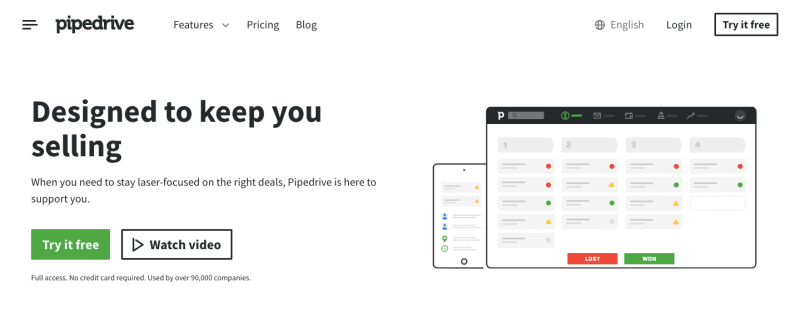
PipeDrive is one of the best CRM retail system on the market. Over 90,000 companies in 179 countries use PipeDrive including Skyscanner and Vimeo. This is a cloud-based eCommerce CRM software with great scalability.
The out-of-the-box package includes all you’ll ever need to establish effective interaction with your customers: manage leads and deals, track communications, automate tasks, see analytics and reports. You can access your PipeDrive dashboard via a mobile app and integrate the CRM with your favorite sales-boosting apps.
This is one of the most customizable eCommerce CRM solutions on the list. It has a powerful API to integrate with popular CMS and shopping cart software, plus, there are tons of plugins available on their app market. Thanks to its customizability you can tweak the system to your liking and perfectly adapt it to your workflows.
5. FreshSales
Best for: SMB eCommerce teams with sales focus
Key features: AI lead scoring, built-in phone, email tracking, automation workflows, CRM analytics
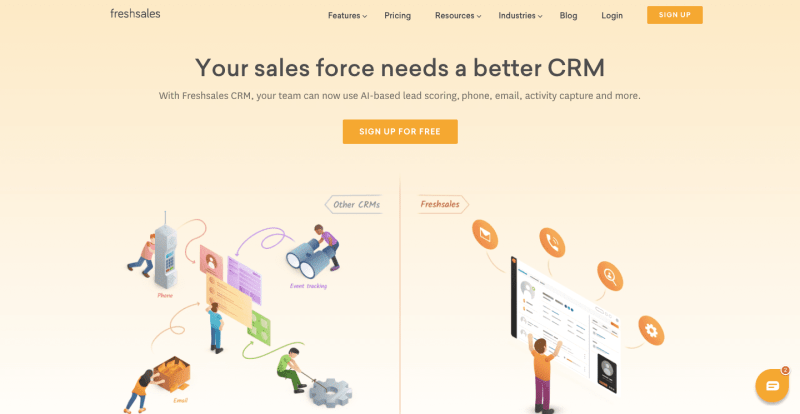
Freshsales CRM is known for its user-friendliness and convenient interface. Freshsales is well-known as a CRM for small retail businesses and can also be a suitable solution for mid-sized businesses. Over 15,000 customers worldwide use Freshsales, including some well-known vendors such as Dyson.
Freshsales includes all the functionality of proper CRM for online store such as contact management, activity monitoring, reports, email campaigns, customer relationship management, etc. In addition to capturing leads, this CRM scores, verifies, and nurtures them in order to boost conversion. Freshsales helps you manage contacts from multiple channels—Google Ads, blogs, websites, and others. Plus, Freshsales Phone Activity Reports help you monitor the performance of your sales reps.
There are other products from this vendor: freshdesk, freshservice, freshcaller, freshteam, and more. Some of them integrate with Freshsales CRM, making a perfectly working business ecosystem. No need for third-party integrations.
6. Bitrix24
Best for: all-in-one CRM with collaboration and project management
Key features: omnichannel communication, internal collaboration, CRM + project management, analytics dashboards
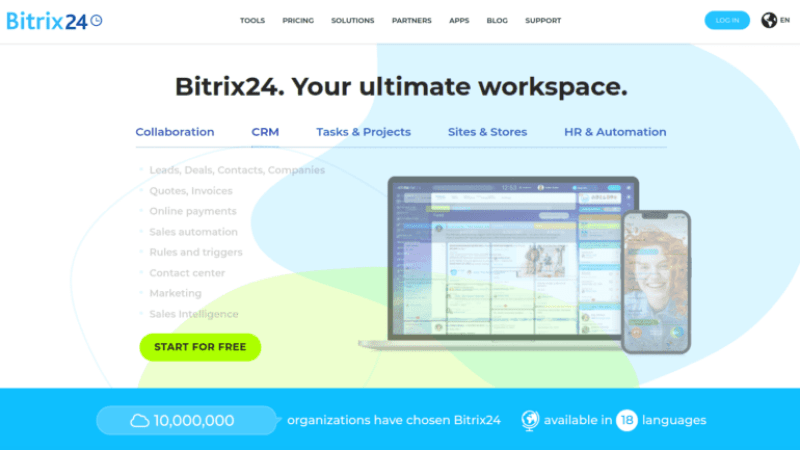
One of the best eCommerce CRM is Bitrix24. Bitrix24 offers a wide range of eCommerce CRM tools, including customer segmentation, multichannel integration, and team collaboration features. You have the opportunity to communicate with colleagues, clients and contractors in a meeting mode. Schedules can also be set and controlled by an administrator.
You can connect mail, telephone, social networks, advertising, end-to-end analytics, and collect requests from all channels: forms on the website, online chats, phone calls and social networks. Bitrix24 also evaluates the prospects of leads and provides managers with analytics of what to look for to increase revenue. In this CRM project management is available in different modes: lists, checklists, Gantt chart, calendar for monitoring deadlines and executors.
For all the benefits and multifunctionality, Bitrix24 may seem not as user-friendly as other systems.
7. ReadyCloud
Best for: eCommerce operations and post-purchase workflows
Key features: order management, returns and fulfillment tracking, customer service context, shipping visibility
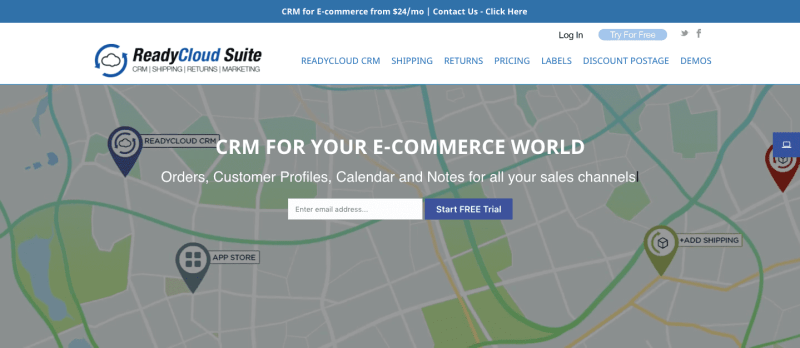
ReadyCloud is a niche eCommerce CRM solution focused on order management, fulfillment workflows, and post-purchase operations rather than classic sales pipelines. It is best suited for ecommerce businesses that prioritize order tracking, returns, shipping visibility, and customer service efficiency.
Unlike traditional CRM software for eCommerce, ReadyCloud acts as an operations layer between your store, warehouse, and support team. It provides a unified view of orders, customer history, shipping status, and returns, helping support teams respond faster and more accurately.
ReadyCloud is a good choice if your main CRM challenge lies in fulfillment and post-purchase experience. However, it lacks advanced marketing automation and sales features found in broader eCommerce CRM systems. In 2026, it works best when combined with a marketing-focused CRM rather than used as a standalone solution.
Ecommerce CRM FAQ
What does eCommerce CRM software do?
CRM in online shopping business helps to centralize customer services. It provides information such as first and last names, phone number, purchase queries, and etc.; provides analytics; allows you to comment on their feedback, start marketing campaigns, and create loyalty programs.
Why do you need an ecommerce CRM software?
CRM eCommerce integration plays an important role. You can automate business processes and optimize manual work by accumulating information in one place.
Is CS-Cart a CRM?
No, CS-Cart and CS-Cart Multi-Vendor are platforms to start a website and a marketplace respectively. They both have a built-in simple CRM. Try a free demo version of a marketplace on CS-Cart Multi-Vendor.
What is the best CRM for eCommerce?
It is difficult to define the best retail CRM. But in our article we mentioned 7 reliable CRMs: Pipedrive, Freshsales, ReadyCloud, Salesforce, HubSpot CRM, Zoho CRM, and Bitrix24.
What is a CRM database?
CRM for online stores helps to collect information about customers (names, telephone numbers, emails, purchase queries, etc.) in one place called a CRM database. It is like an expanded Excel table.
What is the best ecommerce CRM software for small businesses?
The best eCommerce CRM software for small businesses is the one that centralizes customer data, orders, and communication while remaining easy to set up and scale. In 2026, popular eCommerce CRM solutions for small teams include tools like HubSpot CRM and Zoho CRM, which combine automation, segmentation, and ecommerce integrations without enterprise complexity.
Conclusion: Choosing the Right eCommerce CRM Software
Ecommerce CRM software has become a core system for online businesses in 2026. By centralizing customer data, automating communication, and supporting retention strategies, an eCommerce CRM system helps stores grow revenue without increasing operational complexity. Choosing the right CRM software for eCommerce allows businesses to scale personalization, improve customer experience, and build long-term customer relationships.